The Fear of Success
Entrepreneurship was not a decision. It was an accident born of curiosity.
If they name you Leonardo, it's hard not to discover Da Vinci early on, and the universe of human invention. Since childhood I've been fascinated by inventors, real or fictional, whether Gutenberg or MacGyver. But my only idol has been Jacques Cousteau: oceanographer, inventor, and entrepreneur. I was convinced my life would follow in his fins, exploring a still-unknown planet.
Over time I learned that Cousteau was not only a pioneering explorer, but also a scientist who invented out of necessity a solution that changed our species forever: the ability to breathe underwater with total freedom, thanks to the SCUBA tank and air regulator system.
This is how Lemu was born in 2020.
Not as just another venture, but as a response: what would happen if we used humanity's greatest strength*, to solve its greatest problem**?
*(our collective and artificial intelligence)
**(the environmental crisis)
That invention turned him into a successful entrepreneur with Aqua-Lung, and that success led him to dedicate the rest of his life to inspiring generations of earthlings with the underwater world. His documentaries aboard the Calypso awakened the scientific curiosity and ecological awareness of hundreds of millions of people.
Over the years I understood that Cousteau's spirit was not only in the depths, but in the curiosity of exploring. Of trying to solve what has no solution. Of creating in order to understand.
Like any teenager who grew up in a digital world, I knew that invention was no longer just about physical objects, but also digital ones — command by command, pixel by pixel — and that the Internet was the new ocean where anyone could dive in.
That's how ImageMaker was born, in 1995, when I was fifteen, on my mother's computer. We started playing, because you didn't need licenses or permits to build on the network. But within a few years it had become a company developing some of the first online banking platforms, the first airline ticket sales systems and e-commerce on the revolutionary World Wide Web.
What began as curiosity turned into work, and play into responsibility. Our passion became our profession (which, according to Mark Twain, is the secret of success).
But at twenty-four I decided to sell the company. Not because I wanted to get rich, but because it had gotten away from me. It had been born from a creative impulse and had transformed into a machine we no longer controlled — a software factory. What was freedom at first became managing a team that preferred stability over continuing to explore. I had stopped creating and started managing. I learned that not everything that grows, improves.
That was my first great lesson as an entrepreneur: success doesn't always feel like success. Sometimes it feels more like captivity.
In 2005 I founded FayerWayer, with no plan or structure. Only out of frustration: the media didn't cover enough science and technology in Spanish, and even less so Latin American inventors and entrepreneurs.
It was astonishing to see how it quickly became a community that brought together the entire Spanish-speaking world, with hundreds of thousands of comments per month. Collective intelligence united by a language.
The real turning point came when we incorporated artificial intelligence to define our editorial line — neural networks for natural language processing and semantic entity detection. We used algorithms to detect opportunity ratios: topics that interested users but had little content supply.
That's how we combined collective intelligence and artificial intelligence, and that mix exploded. In a few years, FayerWayer was the most-read digital technology publication in Spanish in the world, having spent zero on marketing (and later winning a marketing award, for not having done any marketing).
It was a revolution: millions of people participating, a self-reinforcing network, a cultural experiment that anticipated the era of social media. But it was also a revelation: we were using the most advanced tool at our disposal to make people spend more time in front of screens and sell more advertising.
All that energy invested in solving invented problems, and probably creating some new ones. That's where I learned the emptiness that success without purpose leaves behind.
We had met all the visible objectives: reach, relevance, growth; but it felt like failure. We achieved record revenue, profitability, and traffic, but at the cost of drowning our communities in advertising.
We finally accepted an offer to sell the company, this time to the largest newspaper in the world, after having prioritized short-term benefits and mortgaged our future.
That contradiction haunted me for years. I lived between cities, conferences, and projects, seeking to solve a real problem. This time I decided to give direction to the creative impulse. If I was going to succeed again, it had to be in pursuit of the greatest possible purpose. I had learned that the compass matters more than the stopwatch.
If 100% of the global economy depends on nature and only 1% of companies measure that dependency, integrating nature's intelligence into the value chain will allow us to identify conservation at the center of every organization.
Not as philanthropy, but as business intelligence.
Nature, like Cousteau's sea, was always there. Resilient, patient, waiting for us. In the forests and lakes of southern Chile we found a different kind of intelligence: one that doesn't seek to compete, but to coexist. Planting hundreds of trees we learned that patience is not inefficiency.
That's how Lemu (forest, in Mapudungun) was born, in 2020. Not as just another venture, but as a response: what would happen if we used humanity's greatest strength (our collective and artificial intelligence) to solve its greatest problem (the environmental crisis)?
Lemu seeks to make nature visible in human decisions, where economy meets ecology. Our goal is to close the data gap about the living planet. Because we cannot protect what we do not know.
If 100% of the global economy depends on nature and only 1% of companies measure that dependency, integrating nature's intelligence into the value chain will allow us to identify conservation at the center of every organization. Not as philanthropy, but as business intelligence.
Success, for us, is not measured in billions of dollars of valuation, but in adding value to billions of lives — and not only human ones.
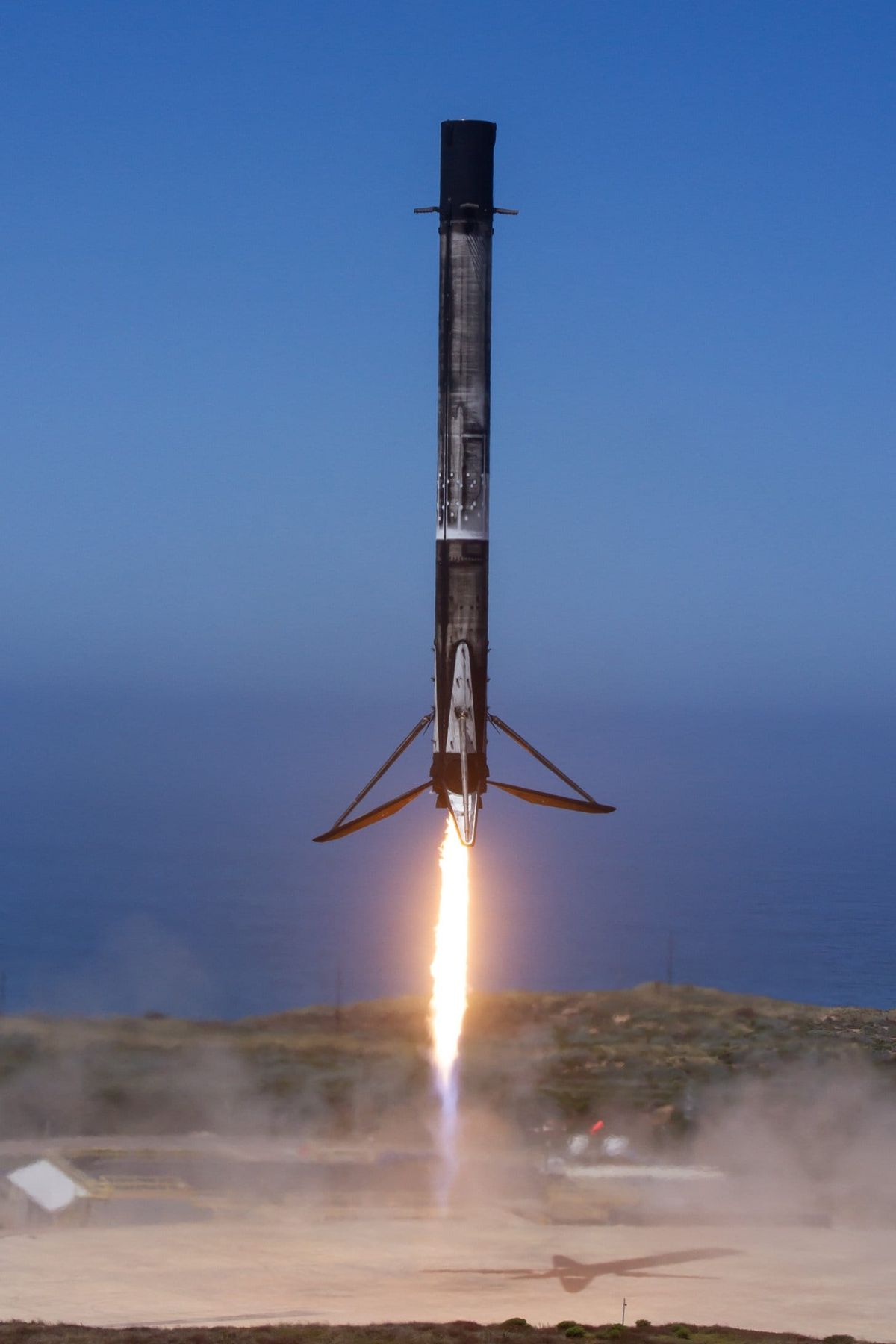
One day we crossed the clouds into the stratosphere. In 2024 we launched Lemu Nge, the first satellite dedicated to observing biodiversity. Six years of development, more than a hundred people across the Americas, Europe, and Africa, countless delays and technical challenges, multiple risks, but a single purpose: to use technology to care for life, not to replace it.
That project taught me another scale of time. While in the tech industry everything is measured in seconds, Lemu Nge took half a decade to reach orbit and is designed to operate for at least five more years. Ten years of life. A tenth of a century. A unit of time more in tune with nature's rhythms. By measuring centuries, not seconds, you get farther than imagined. Patience and persistence, over urgency.
Success, for us, is not measured in billions of dollars of valuation, but in adding value to billions of lives — and not only human ones.
And yet, the fear persists. The fear of success is not the fear of achieving our goals, but of losing the freedom that led us to create them. It is the fear that purpose will dissolve in the administration of the result. That impact will make you visible and visibility will distract you. That you'll forget why you started.
Today I try to live more slowly, following the planet's seasons. To measure progress in learnings, not in likes. I prefer having lunch every day with my family over business lunches. Remembering that a project without purpose ends up devouring what inspired it. Life is long and the days are short; do tomorrow what you don't have to do today.
That's why, while Lemu Nge orbits in the sky, on Earth we dream of the next decade: the Oceanario Austral, at the gateway to Patagonia. Not a theme park, but a space to learn, protect, and reconnect with the marine life of the southern world. The childhood that dreamed of being underwater.
Entrepreneurship, I have learned after countless failures, is not about conquering markets. It is about conquering fear.
The fear of failure, of course. But above all, the fear of succeeding and discovering it wasn't the result you were looking for. True triumph is not in what one achieves, but in why one does it.
In my case, after so many projects, I discovered that my purpose is not to be the father of an invention, but to build diverse teams with shared values and a common goal, committed to a purpose that benefits the greatest number of inhabitants of this planet.
Because nobody achieves anything alone. Everything we do, we build with others. Only then does the fear of success end.
Originally published as an essay in the book "Rumbo Emprender: Dos Caminos Mismo Destino" (2025) by Leonardo Ljubetic and Daniel Daccarett, by invitation of the authors within Chapter VI 'Balance and Meaning'.
[ISBN: 9789561238237]