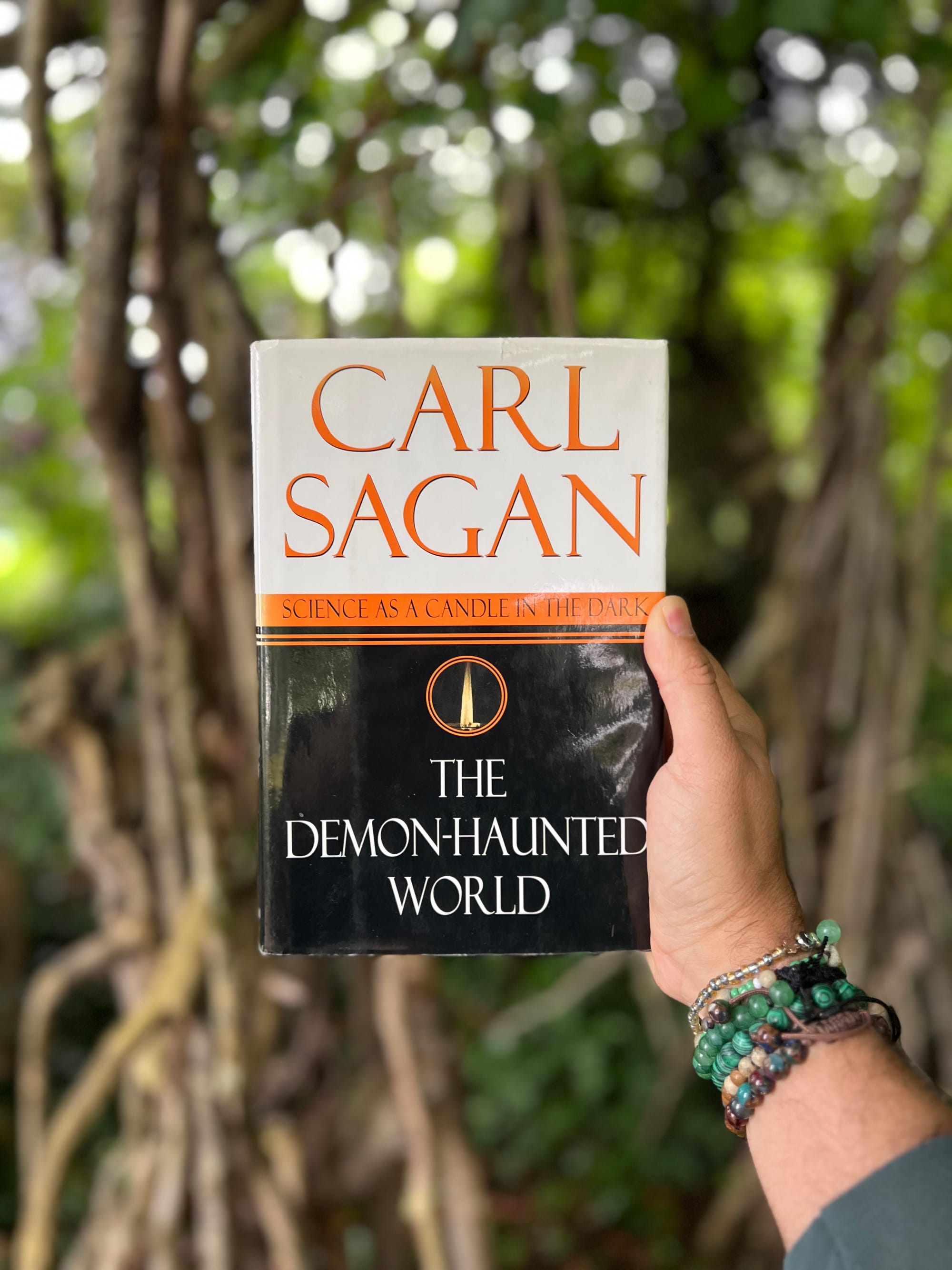
Baloney Detection Kit by Carl Sagan
After reading Sagan's book, I needed a reminder of his Baloney Detection Kit — today more than yesterday. This is my TL;DR.
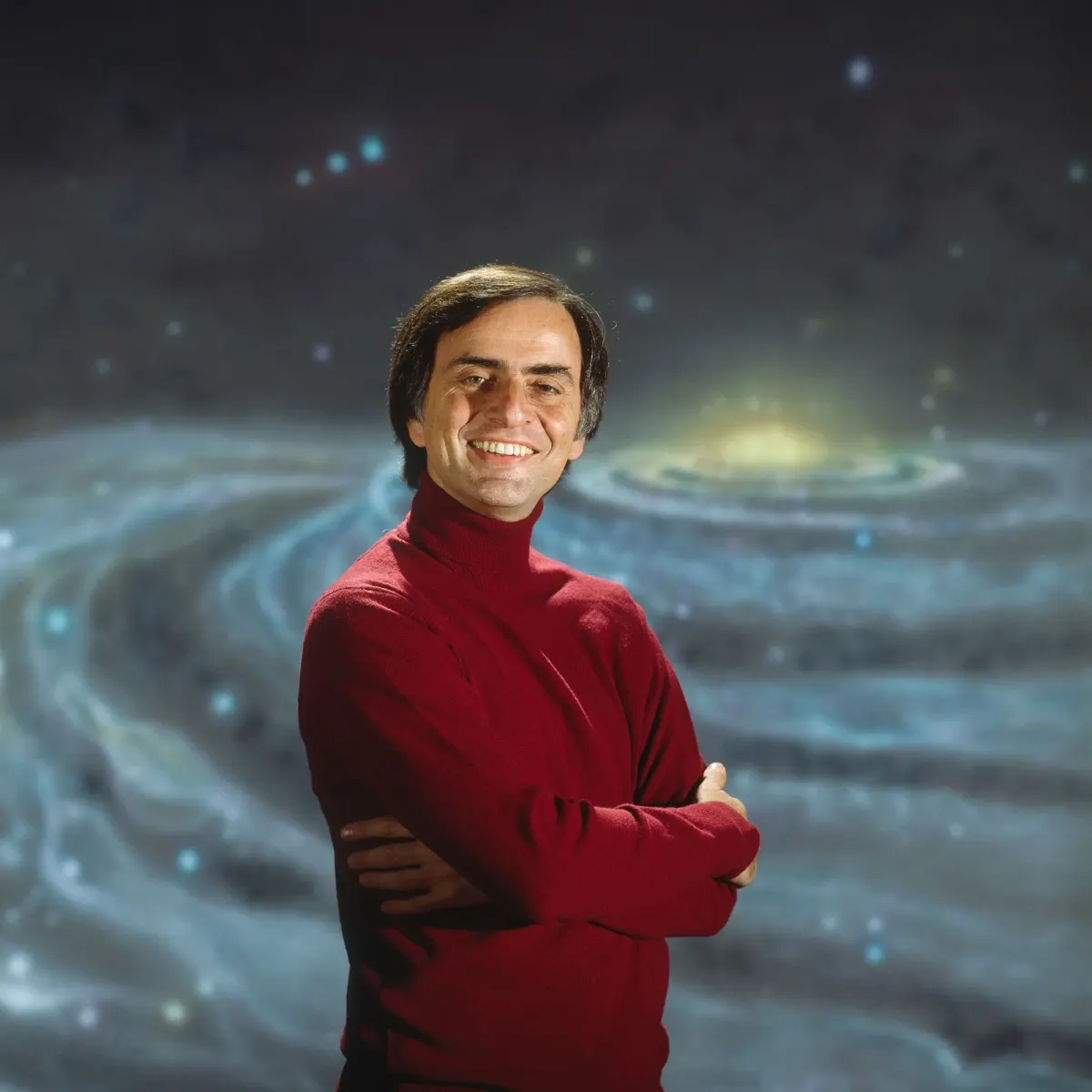
“Like all tools, the baloney detection kit can be misused, applied out of context, or even employed as a rote alternative to thinking. But applied judiciously, it can make all the difference in the world — not least in evaluating our own arguments before we present them to others.”
— Carl Sagan (The Demon-Haunted World, 1995)
Tools 🧰
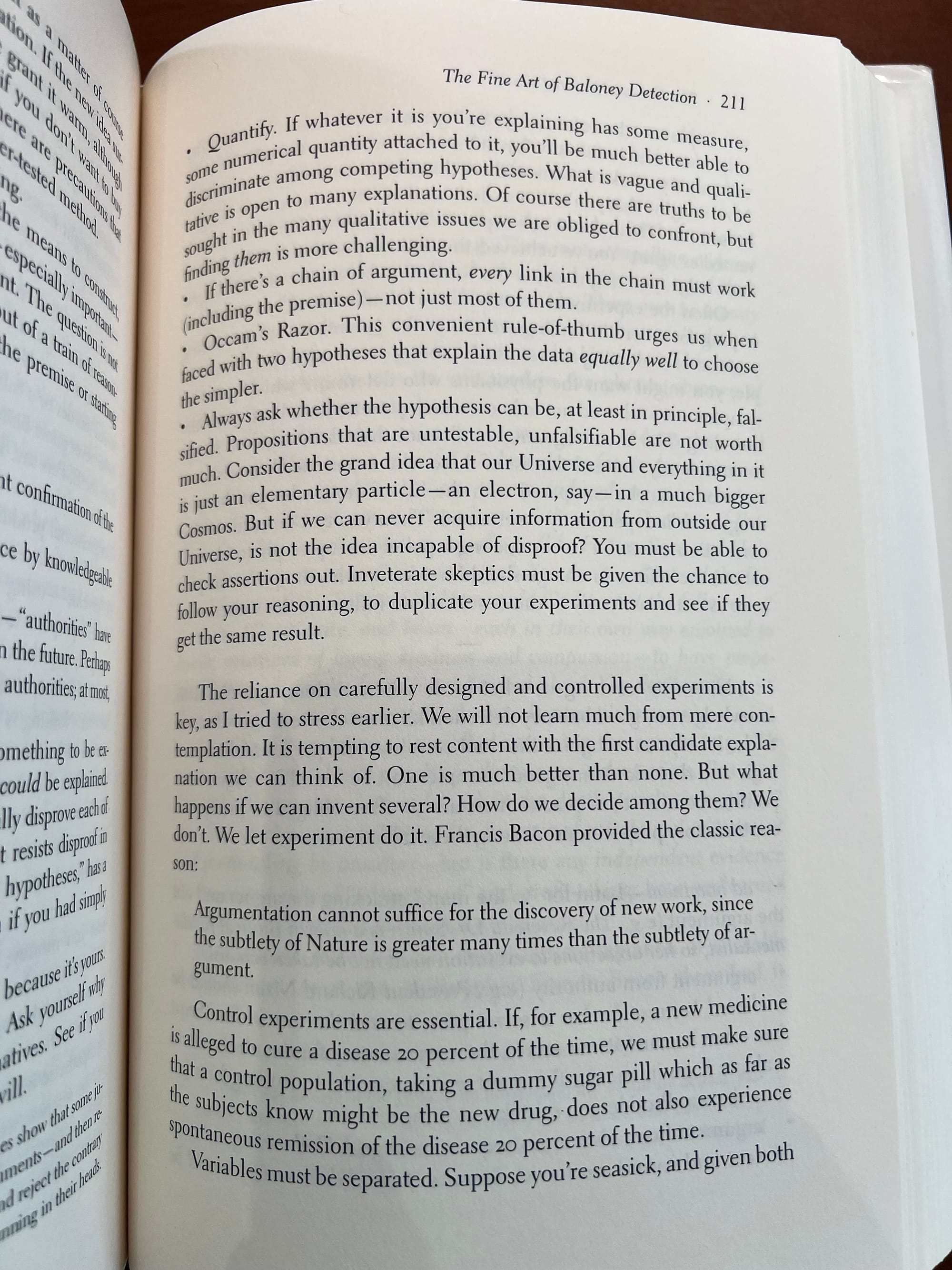
For skeptical thinking
- Independent confirmation — facts need outside verification
- Substantive debate — invite all knowledgeable perspectives
- No argument from authority — experts err; there are no authorities, only experts
- Multiple hypotheses — generate all possible explanations, then test to eliminate
- No attachment — your hypothesis is a waystation, not a destination
- Quantify — vague + qualitative = open to anything; measure to discriminate
- Chain of argument — every link must hold, including the premise
- Occam’s Razor — when two hypotheses fit equally, choose the simpler
- Falsifiability — if it can’t be disproved in principle, it’s not worth much
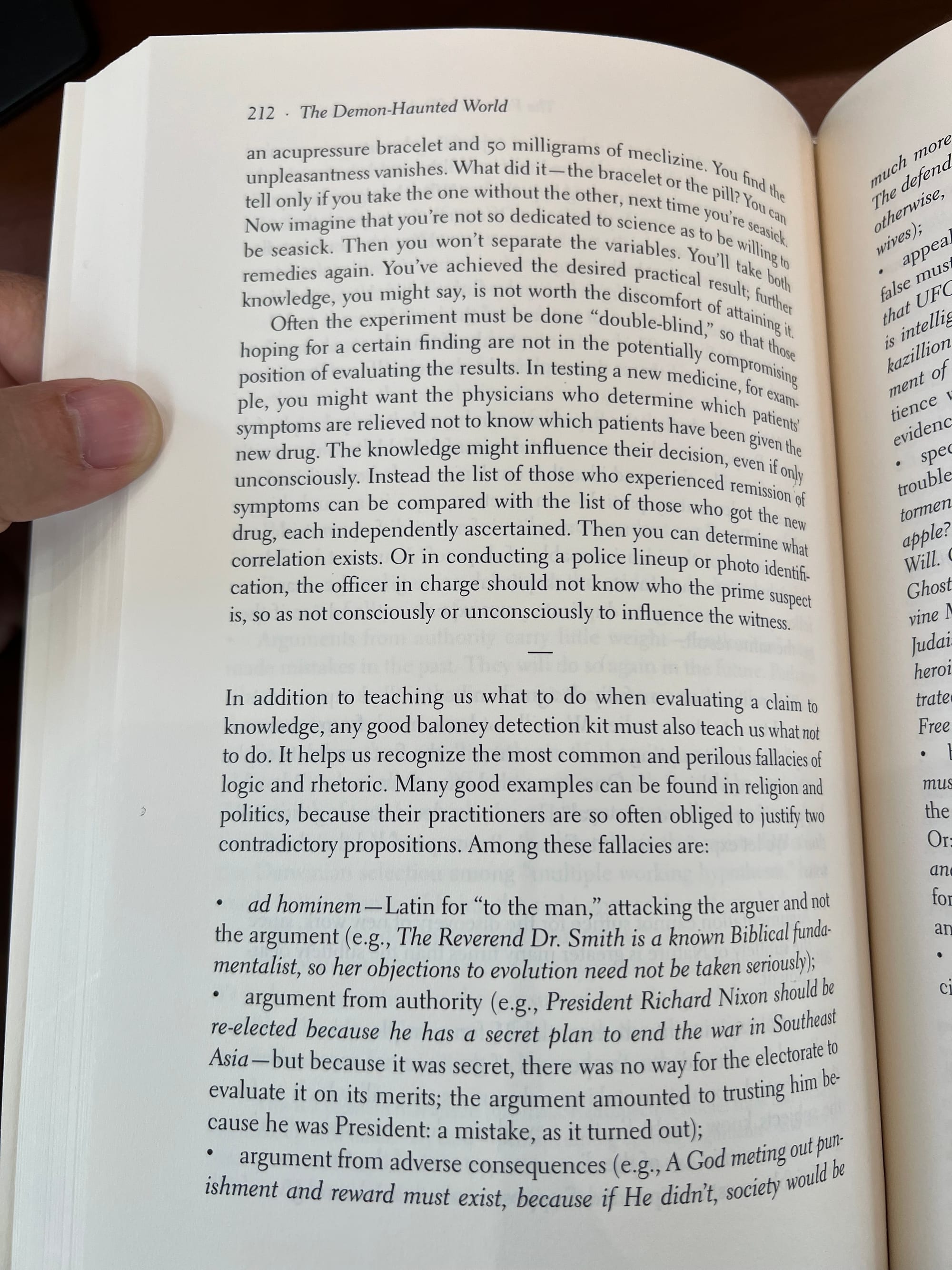
- Controlled experiments — design out bias; run double-blind when needed
- Separate variables — one change at a time
Fallacies ⚠️
Which are common
- Ad hominem — attacking the person, not the argument
- Appeal to authority — unverifiable claims from the powerful
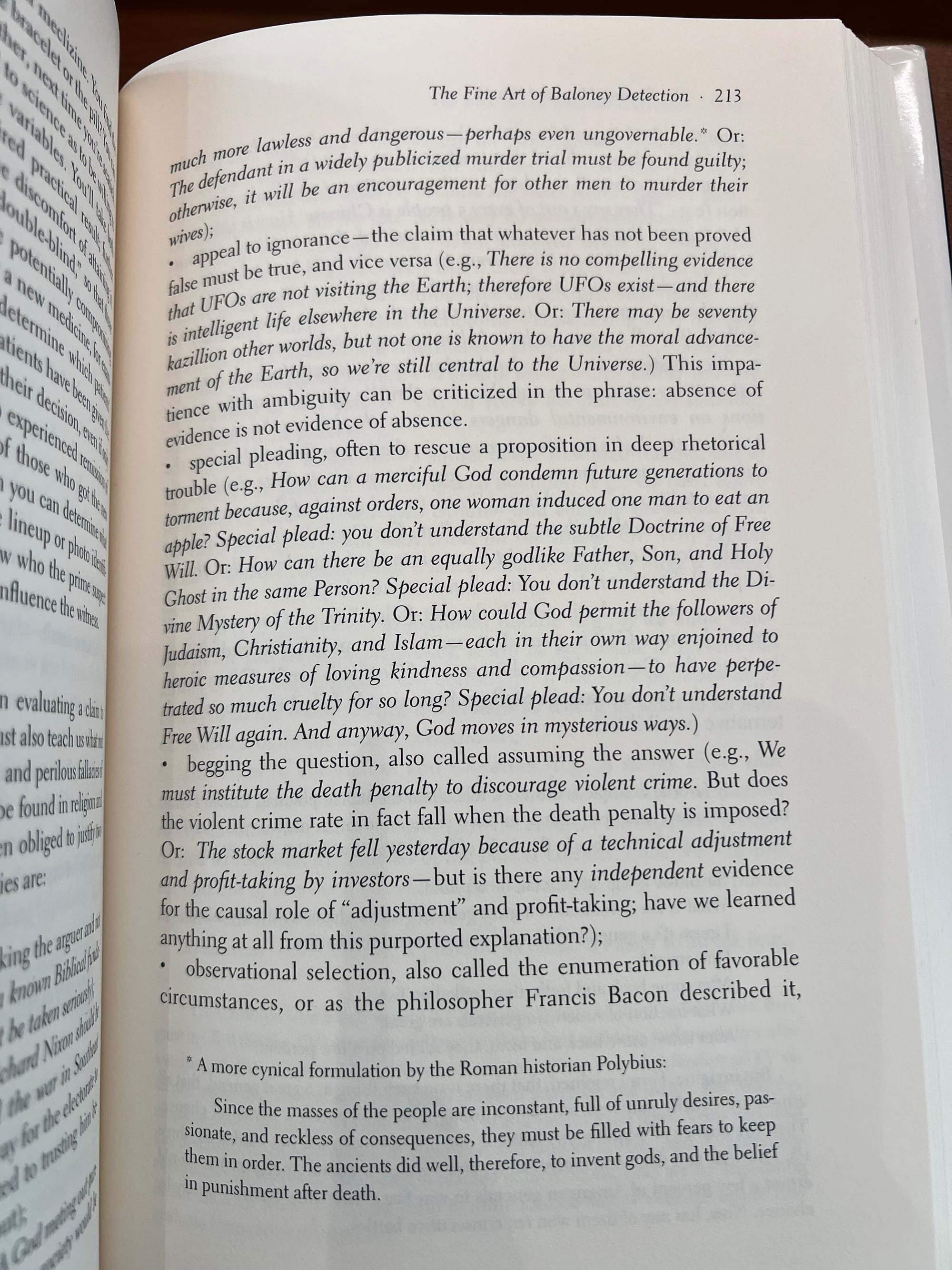
- Adverse consequences — “it must be true or else…”
- Appeal to ignorance — absence of proof is not proof of absence
- Special pleading — invented exceptions to rescue a failing argument
- Begging the question — assuming the answer in the premise
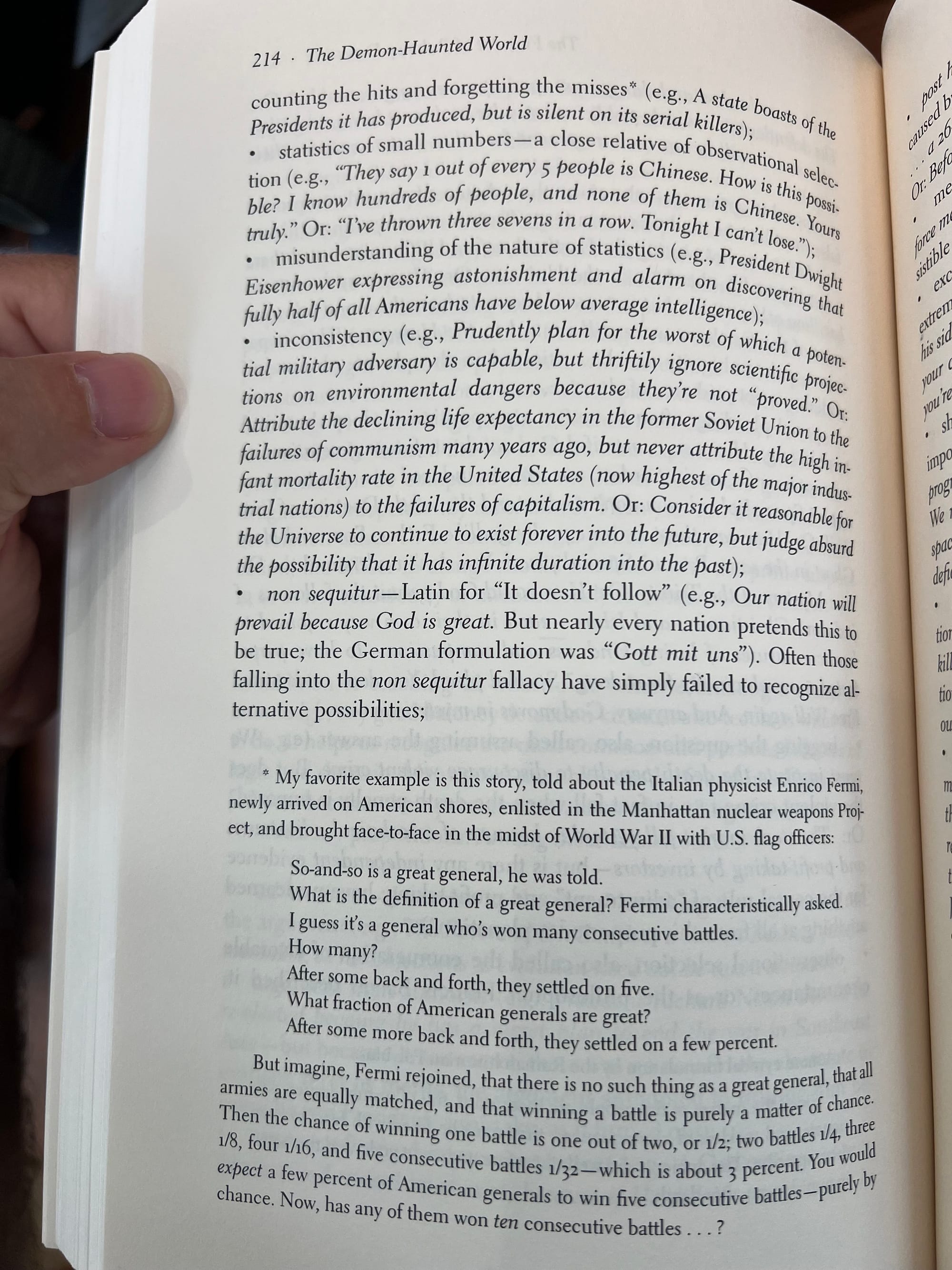
- Observational selection — counting the hits, forgetting the misses
- Small numbers — drawing big conclusions from tiny samples
- Statistics misread — e.g. confusing median with average
- Inconsistency — applying standards selectively
- Non sequitur — conclusion doesn’t follow from premise
- Post hoc — “it happened after, therefore caused by”
- Meaningless question — false paradox with no real referent
- False dichotomy — ignoring the vast middle ground
- Short-term vs. long-term — urgency used to dismiss larger stakes
- Slippery slope — extreme outcome presented as inevitable
- Correlation ≠ causation — co-occurrence is not mechanism
- Straw man — caricature a position to make it easier to attack
- Suppressed evidence — half-truths, selective disclosure
- Weasel words — euphemism as camouflage for meaning
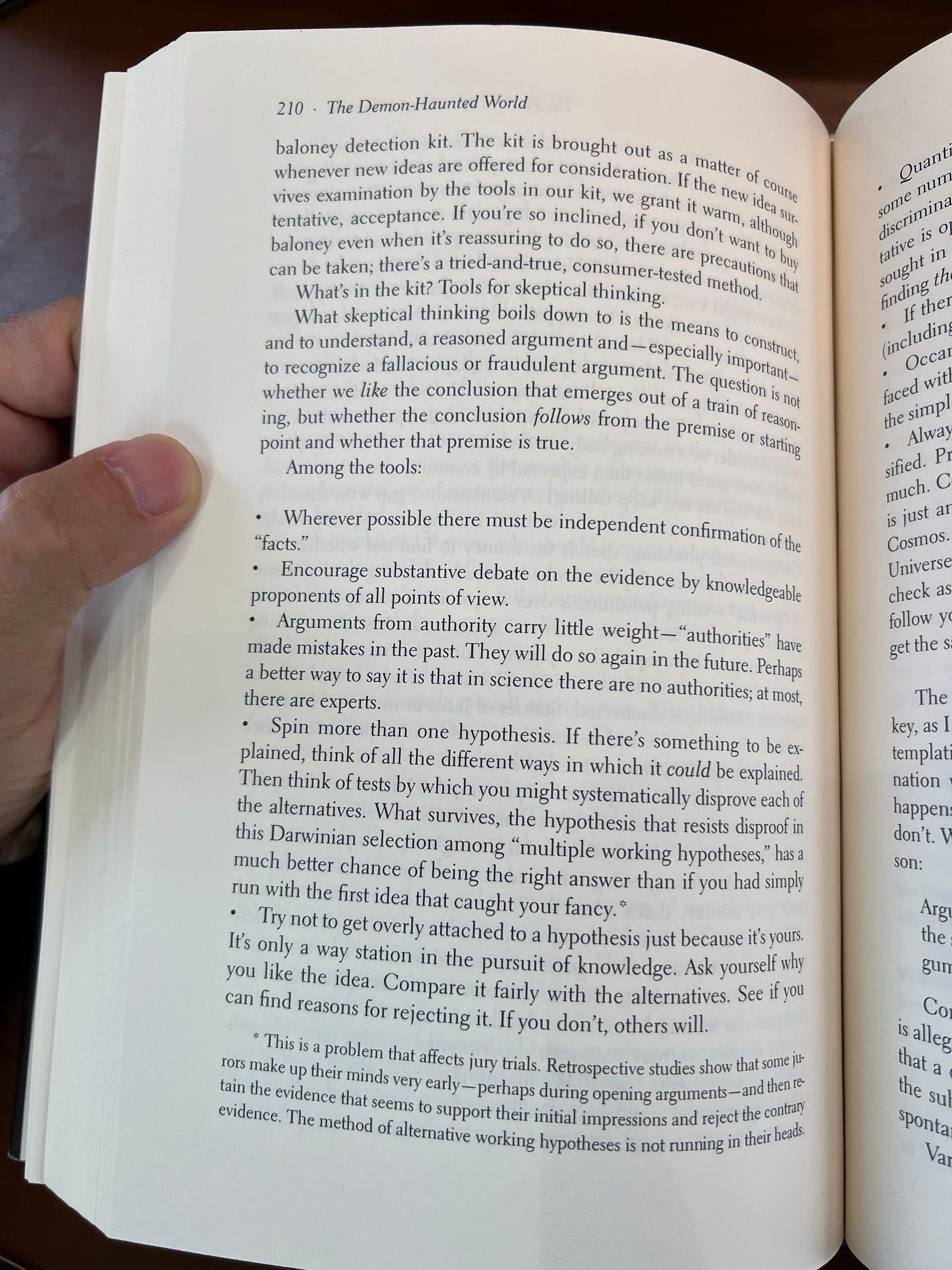
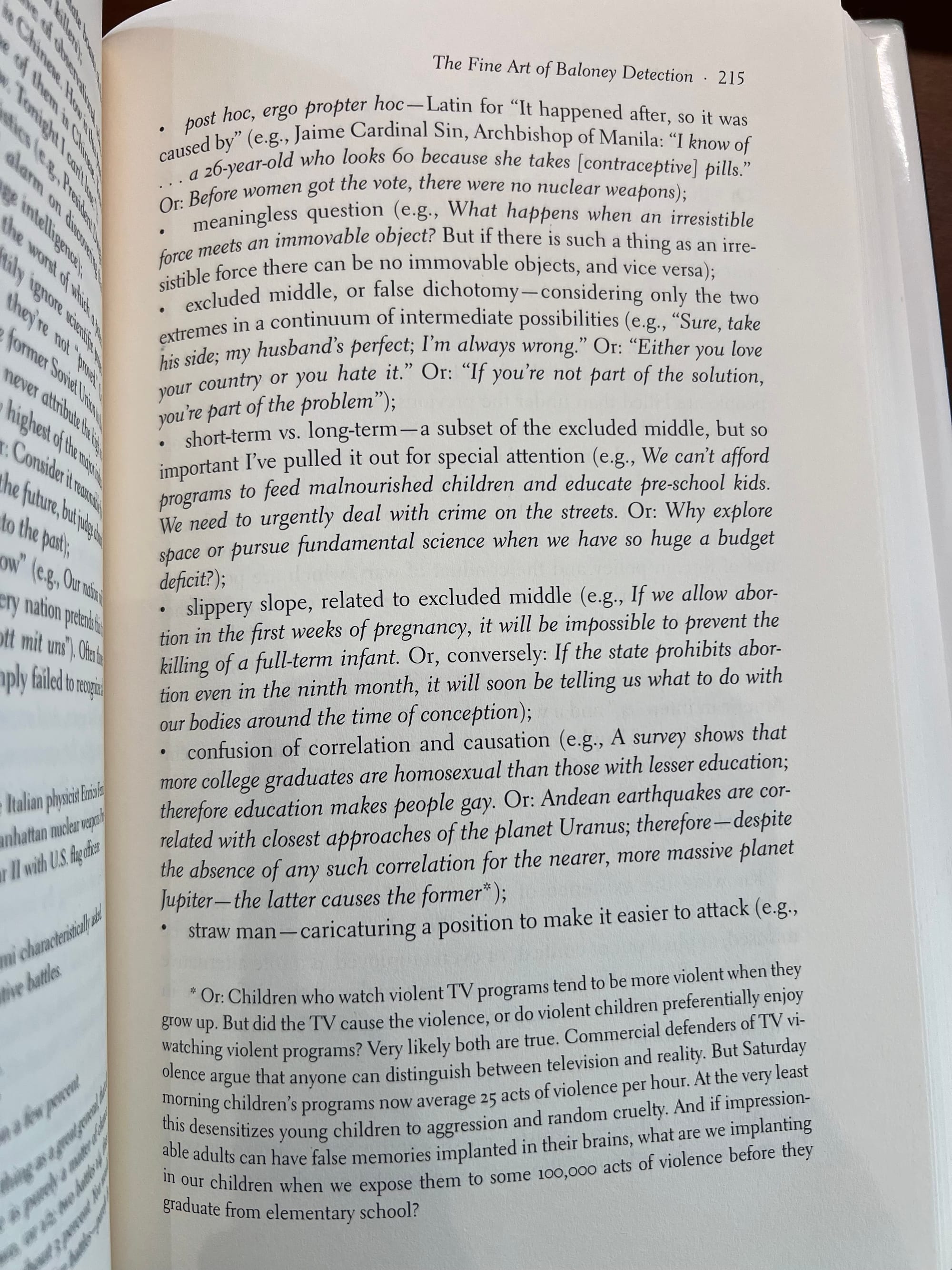
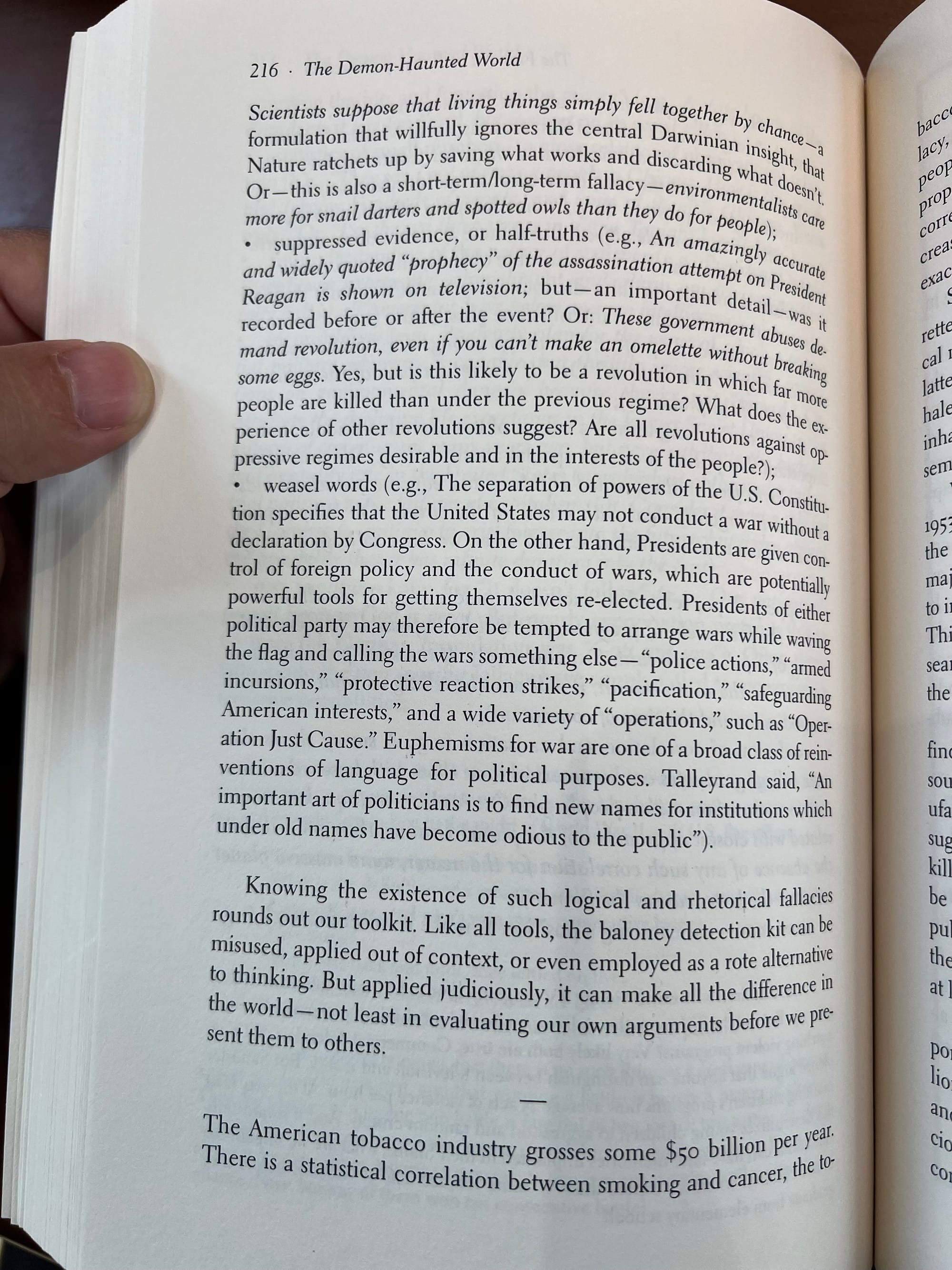
Pages 210 to 216 from Carl Sagan‘s “The Demon-Haunted World“, where he proposes tools and calls out fallacies in Chapter 12, “The Fine Art of Baloney Detection”.